
BEND WINDOW CARE GUIDE
The Bend Homeowner’s Guide to Clean, Clear Windows
Windows in Bend deal with things a Portland house never sees: pine pollen by the bucket, months of wildfire smoke, sprinklers running on sunny glass and snow that sits on the sills until March. Here’s how to keep them clear, what you can handle yourself and when it’s worth a call.
What Makes Bend Hard on Windows
Most window advice online is written for rainy or humid places. Bend is the opposite. We sit on the dry side of the Cascades with roughly 11 to 12 inches of precipitation a year, lots of sun and big swings between day and night temperatures. That changes what gets on your glass and how long it stays there.
- Very little summer rain. From late spring into fall there’s almost nothing to rinse dust off, so it builds up week after week.
- Two pollen waves. Juniper pollen shows up first, around March and April. Then ponderosa pine drops the yellow dust that coats cars, decks and screens in late spring.
- Smoke season. In recent years Bend has logged weeks of unhealthy air from wildfire smoke between June and October. The fine ash and residue that settles on glass is gritty and smears if you wipe it dry.
- Irrigation. Lawns here run on sprinklers all summer. When overspray hits a sunny window it dries in minutes and leaves a ring of minerals behind.
- Snow and cold. Snow and ice sit against lower panes and in tracks, and freeze-thaw cycles push grit into every seal and corner.
None of this is exotic. It just means a Bend window gets dirty in different ways at different times of year, and the fix for one (a rinse for pollen) can be the wrong move for another (a dry wipe on smoke ash).
DIY THAT WORKS
How to Clean Your Own Windows Without Streaks
You don’t need special gear for a good result on reachable, ground-floor glass. You need the right order and a squeegee, not paper towels.
What to have on hand
- A bucket of warm water with a few drops of plain dish soap. More soap is not better; it leaves film.
- A strip washer or a soft sponge to scrub, and a 12 or 14 inch squeegee with a fresh rubber blade.
- Lint-free microfiber towels for edges and sills.
- A garden hose for pre-rinsing outside glass and screens.
The order that avoids streaks
- Pull the screens first and set them aside. Clean them separately, more on that below.
- Rinse the outside glass with the hose to float off pollen and grit before anything touches it. This one step prevents most fine scratches.
- Wet the glass with soapy water and scrub the whole pane, including the corners.
- Squeegee from top to bottom, wiping the blade after every pass, then detail the edges with a towel.
- Work on the shady side of the house. In Bend sun, soapy water dries on the glass before you can squeegee it, which is where most streaks come from.
What not to do
- Don’t dry wipe dusty or smoky glass. The grit acts like sandpaper. Always rinse or wet it first.
- Don’t use a razor blade on glass you’re unsure about. Tempered glass, which is required in doors and many large windows, can scratch easily when scraped. Leave paint and sticker removal on those panes to someone who can check the glass first.
- Don’t scrub spots with abrasive pads or powdered cleansers. They can haze the surface permanently.
- Don’t chip ice off windows. Let it melt. Cold glass is more vulnerable to chips and cracks.
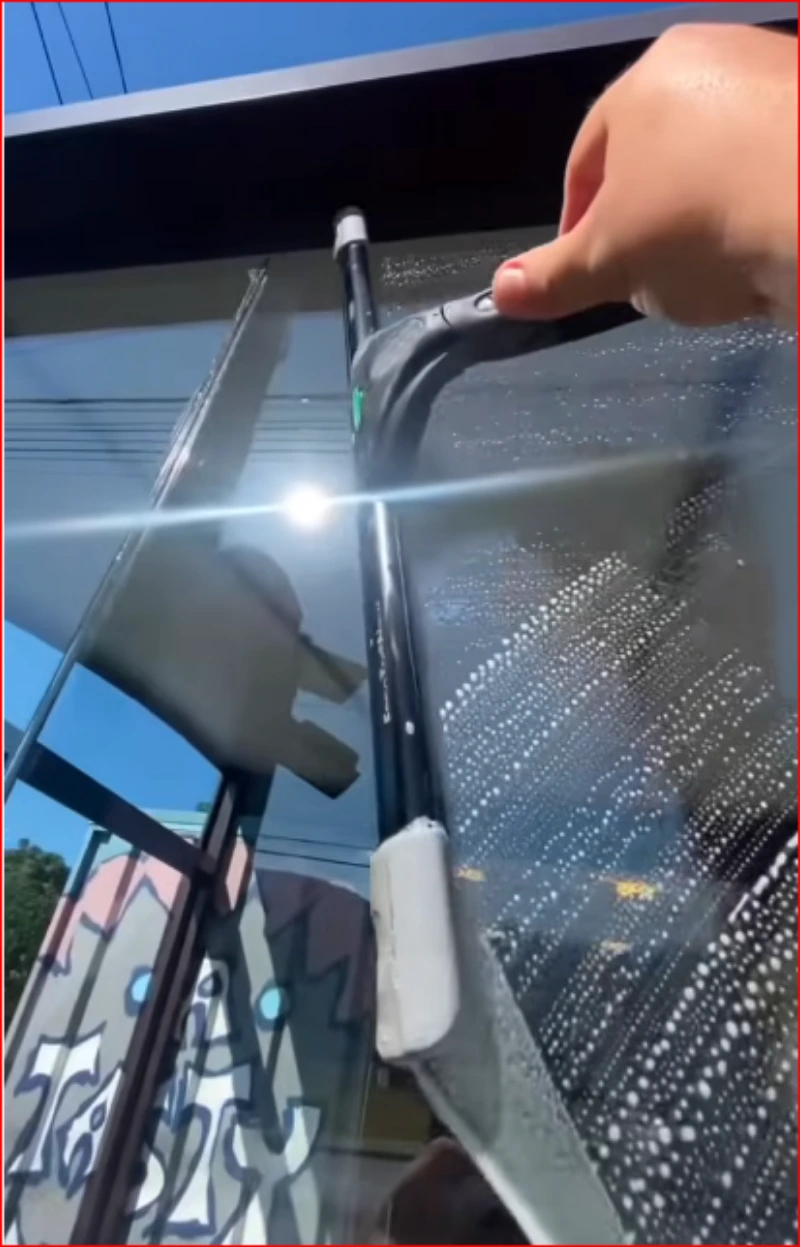
The Parts Everyone Skips: Screens, Tracks and Sills
If your windows look dull a week after you cleaned them, the screens are usually why. They catch pollen and ash all season, and the next breeze or sprinkler blows it right back onto the glass.
- Screens: brush them gently, rinse with a soft spray, and let them dry fully before they go back in. Never pressure wash them; it stretches the mesh.
- Tracks: vacuum out needles and dust before you wipe, or you’ll just make mud. Check the small drain slots at the bottom of the frame, called weep holes, and clear them so snowmelt can drain.
- Sills: wipe the outside ledges after pollen season. That yellow film holds moisture against the frame.
If you’d rather hand this part off, we do screen, track and sill cleaning in Bend on its own or with a full window cleaning.
Spots, Film and Haze: What You’re Looking At
Not every mark on the glass is dirt. Here’s a quick way to tell what you have before you try to fix it. Unfamiliar terms are explained in our window cleaning glossary.
| What you see | Likely cause | What to try |
|---|---|---|
| Yellow-green dust, heaviest in late spring | Ponderosa or juniper pollen | Rinse, then wash and squeegee |
| Grey film that smears when wiped | Wildfire smoke and ash | Rinse first, then wash; never dry wipe |
| White rings or dots on lower panes | Sprinkler overspray drying in the sun | Mild vinegar solution, then rinse and dry |
| Cloudy patch that won’t wash off at all | Mineral etching into the glass | Needs professional restoration |
| Fog between the two panes | Failed seal in a double pane unit | Cleaning can’t reach it; the unit needs repair |
White spots are the question we hear most. Surprisingly, Bend’s city tap water is actually soft, so most white spots come from sprinklers, not the tap. When spots have been there long enough to etch, our hard water stain removal service covers what can and can’t be restored.
When It Makes Sense to Call a Pro
Plenty of Bend homeowners clean their own ground-floor windows and only call for the rest. That’s a sensible split, and our DIY vs. professional comparison breaks down the cost and safety trade-offs. These are the jobs where a professional is usually worth it:
- Second-story and great-room glass. Ladder work on uneven ground or over a deck is where people get hurt.
- Skylights. They mean roof access, and pine needles and smoke residue collect on them fast.
- New construction or remodels. Paint, stucco and label glue need careful removal.
- Stubborn spots. If vinegar doesn’t move them, they need professional removal.
- Storefronts and offices. Regular service keeps them presentable.
Outside Bend? Same Region, Different Problems
Central Oregon towns share a climate, but each one throws something different at your glass.
Bend Window Care Questions
How often should windows be cleaned in Bend?
Twice a year works for most homes: once in early summer after pine pollen, and once in fall after smoke season. Homes near busy roads, under heavy pines or with sprinklers hitting the glass often add a third visit.
Is it bad to clean windows in direct sun?
It’s not harmful, but it makes streaks almost certain. Bend’s dry air and strong sun dry the soapy water before you can squeegee it off. Work on the shady side and follow the sun around the house.
Can I use vinegar on my windows?
A mild vinegar and water mix is fine for light mineral spots on regular glass. Rinse well afterward and keep it off stone sills and metal frames for long periods. If spots don’t budge, they may be etched into the glass.
Should I clean windows while smoke is still in the air?
It’s usually better to wait until the smoke clears for good. Ash keeps settling as long as fires are burning, so an early cleaning won’t last. When you do clean, rinse first so the grit doesn’t scratch.
CALL FOR WINDOW CLEANING
Want Someone Else to Handle the Ladder Work?
Call us and tell us what’s bugging you about your windows. We’ll give you a straight answer and a price, whether it’s the whole house or just the high glass. Serving Bend and Central Oregon.