SCREEN, TRACK & SILL CLEANING
Window Screen, Track & Sill Cleaning in Bend
Pollen, dust and pine needles don’t just land on the glass. They pack into screens, tracks and sills, where they make sliders stick and blow right back onto clean windows. We clean the parts most people skip.
Why Screens and Tracks Take a Beating in Central Oregon
Bend gets only about 11 inches of precipitation a year, and most of it falls as winter snow. From late April through September there’s very little rain to rinse anything off, so whatever blows in stays put.
- March and April: western juniper pollen drifts in first.
- May and June: ponderosa pine releases the yellow dust that coats decks, cars and every screen on the house. It’s coarse enough that it doesn’t bother most allergies, but it sticks in screen mesh like nothing else.
- June through October: wildfire smoke season. Fine ash settles into mesh and track corners, and it turns to grey paste the first time it gets wet.
- Fall: needles, seed husks and sap from ponderosas collect along sills and in the bottom of sliding door tracks.
Screens act like a filter for all of it. Once the mesh is loaded, every breeze and every rain shower pushes that grit back onto the glass, which is why windows cleaned without their screens often look dull again within a week or two.
What Screen, Track and Sill Cleaning Includes
Screens
Each screen comes out, gets a soft-brush wash on both sides, a gentle rinse and time to dry before it goes back in. We check the mesh and frame as we go and point out tears, loose spline or bent frames so you know what needs repair. We don’t pressure wash screens; it stretches the mesh and can pop it right out of the frame.
Tracks
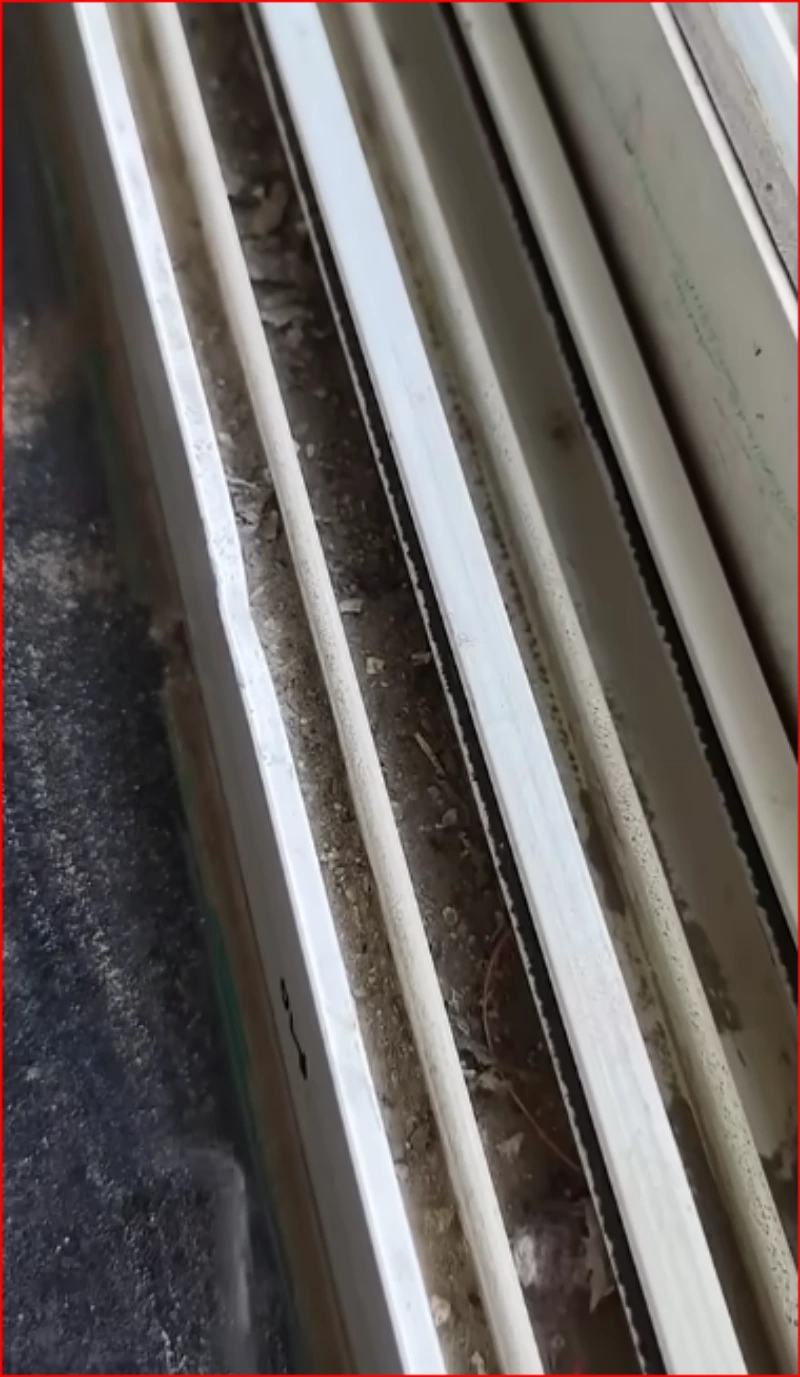
Tracks get vacuumed first to pull out the loose dust, needles and bugs, then detailed into the corners where grime packs hardest, and wiped down. We clear the small drainage slots at the bottom of the frame, called weep holes, so rain and snowmelt can drain the way the window was designed to.
Sills and frames
Interior and exterior sills and frames are wiped clean, including the pollen film that builds up on the outside ledges every spring. Sliding glass door tracks are included when you ask for track cleaning, and they’re usually the dirtiest track in the house.
Signs Your Screens and Tracks Need Attention
- Sliding windows or the patio door grind, stick or take two hands to open
- A yellow or grey film on the screens that you can see from across the room
- Black buildup in track corners, or water pooling in the track after rain
- Freshly cleaned glass that looks hazy again after the first windy day
- Dust and needles blowing indoors whenever you open a window
Clogged weep holes are the one to take seriously. When the drainage slots are blocked, water sits in the track instead of draining out, and standing water against a window frame is never a good thing.
Keeping Them Cleaner Between Visits
- Run a vacuum crevice tool along your tracks once pollen season wraps up in late June, and again after the needles drop in fall.
- If you rinse screens yourself, use a hose on a gentle setting and a soft brush, never a pressure washer.
- Store any screens you take down for winter flat, not leaning, so the frames don’t bow.
- Time your window cleaning after the big pollen weeks rather than before them.
Pricing and How to Book
Screen washing and sill wiping are part of every full-service residential window cleaning visit, and detailed track cleaning is available on request. You can also book screens and tracks on their own, which is handy in early summer when the glass is fine but the screens are yellow.
Price depends on how many screens and tracks there are, sliding doors, how packed the tracks are, and access. We quote before any work starts.
Screen and Track Cleaning FAQ
Can I book screen and track cleaning without window cleaning?
Yes. Plenty of people book it on its own after pollen season, when the screens are the problem and the glass isn’t. Call and we’ll quote it separately.
Do you repair torn or bent screens?
We clean screens and check them as we go, and we’ll point out torn mesh, loose spline or bent frames so you can have them repaired or replaced. We won’t charge you to clean a screen that needs replacing without telling you first.
Is it okay to pressure wash my window screens?
It’s not a good idea. High pressure stretches the mesh, can push it out of the spline channel and bends lightweight frames. A soft brush and a gentle rinse get them just as clean without the damage.
How often should screens and tracks be cleaned in Bend?
Once a year at minimum, ideally in early summer after the ponderosa pollen settles. Homes with lots of pine cover or sliding doors that get daily use usually benefit from a second cleaning in the fall.
What are weep holes and why do they matter?
They’re small drainage slots at the bottom of the window frame that let rain and snowmelt drain out of the track. When dust and needles clog them, water sits in the track instead, so we clear them as part of track cleaning.
CALL FOR WINDOW CLEANING
Screens Yellow Again?
Call us with how many screens and sliding doors you have and we’ll give you a straight price. We clean screens, tracks and sills across Bend and Central Oregon.